
Native Contracting and the NHO 8(a) Program
A Native Hawaiian Organization (NHO) is a not-for-profit organization, managed by Native Hawaiians that principally serves Native Hawaiians, in accordance with 20 U.S.C. § 7517(6). Small businesses owned by Native entities, such as NHOs, Tribes, and Alaska Native Corporations (ANCs), are authorized to participate in the Small Business Administration 8(a) Business Development Program.
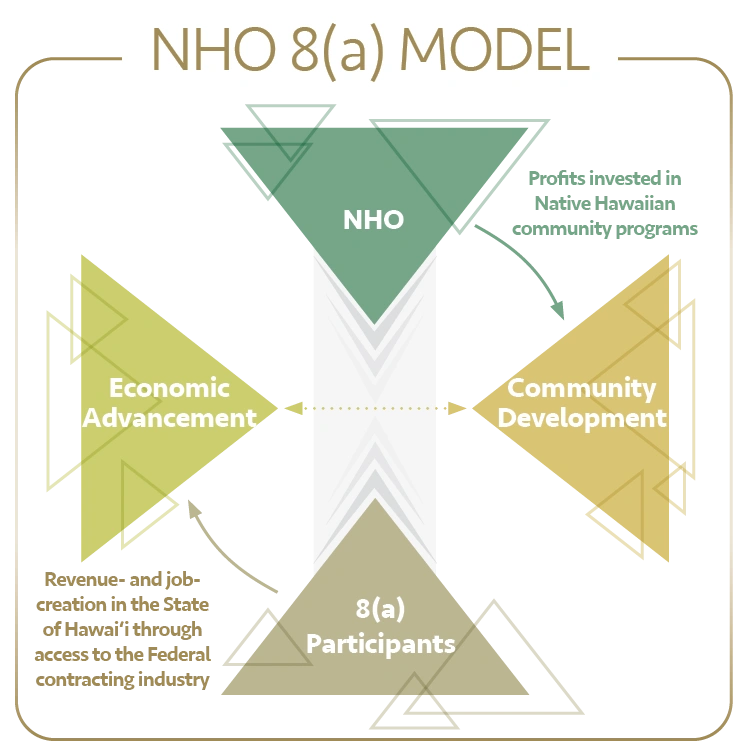
The intent of the Native 8(a) Program is to provide Native communities with the ability to develop self-sufficient economic ventures that support their communities. Unlike 8(a) businesses owned by individuals, NHO-owned businesses are required by law and SBA regulations to reinvest profits into their Native communities.
All NHO-owned 8(a) companies are subject to the same stringent SBA reviews, audits, and performance requirements as other federal contractors.
The Nakupuna Foundation owns a family of 8(a), small, and large businesses, collectively known as the Nakupuna Companies. Profits generated by the Companies are used by the Foundation to fund investments in the Native Hawaiian community.
The Nakupuna Foundation is a registered Native Hawaiian Organization (NHO) and has been approved by the U.S. Small Business Administration (SBA) to participate in the 8(a) Business Development program under 13.CFR.124.3.
The Nakupuna Companies are a family of 8(a) and former 8(a) companies that provide innovative mission & business operations, IT, facilities & infrastructure, logistics, and environmental support services as a means of helping the Foundation generate impactful economic support to our partner organizations and beneficiaries.
Turning Federal Work into Meaningful Impact
NHOs invest in their communities through the companies they own, which partner with the federal government. By maintaining high standards and honoring Native values, NHO-owned companies help provide quality services to the government through acquisition processes that are efficient and cost-effective.
The success of these companies directly supports the NHO’s mission allowing them to reinvest in their communities, helping to strengthen cultural, educational, and economic well-being for future generations.
The Nakupuna Foundation uses profits generated by the Nakupuna Companies to fund scholarships, educational programs, and community initiatives. Through this work, the Foundation has re-invested more than $15.2 million into the Native Hawaiian community demonstrating the positive and lasting impact NHOs can have across Hawai‘i and beyond.


Turning Federal Work into Meaningful Impact

NHOs invest in their communities through the companies they own, which partner with the federal government. By maintaining high standards and honoring Native values, NHO-owned companies help provide quality services to the government through acquisition processes that are efficient and cost-effective.
The success of these companies directly supports the NHO’s mission allowing them to reinvest in their communities, helping to strengthen cultural, educational, and economic well-being for future generations.
The Nakupuna Foundation uses profits generated by the Nakupuna Companies to fund scholarships, educational programs, and community initiatives. Through this work, the Foundation has re-invested more than $15.2 million into the Native Hawaiian community demonstrating the positive and lasting impact NHOs can have across Hawai‘i and beyond.
Native Hawaiian Organization & 8 (a) Program Frequently Asked Questions (FAQs):
Explore FAQs about NHOs in the 8(a) Program.
Understanding NHOs
Are NHOs 501(c)(3) Nonprofit Organizations?
Not necessarily. NHOs are formed under Hawaii law as nonprofit organizations. This is a legal structure and not a tax-exempt designation. To receive a tax-exempt designation, an NHO must file an application with the Internal Revenue Service, usually claiming an exemption under Internal Revenue Code 501(c)(3). NHOs that elect to become 501(c)(3) organizations need to be mindful of IRS rules concerning this designation and penalties for non-compliance. Many NHOs choose not to seek 501(c)(3) tax-exempt status so they can operate with greater flexibility, while remaining fully subject to federal taxes and reporting requirements. The Nakupuna Foundation is not a 501(c)(3) and operates as a taxable nonprofit entity.
How Does Ownership Work Between an NHO and Its Companies?
The NHO must own at least 51% of each company and, maintain unconditional control, as defined by SBA regulations. As an NHO-owned company, the company can apply to the SBA 8(a) Business Development Program. Once approved, the company is considered an NHO-owned 8(a) company and is eligible for certain contracting programs. As the majority owner, the NHO can allocate profits generated by each company as they see fit and in accordance with their operating agreements and by-laws.
Who Governs the NHO, and Why Does Native Hawaiian Leadership Matter?
The NHO is governed by a Board of Directors composed of a majority of Native Hawaiians, in accordance with 13 C.F.R. § 124.110. Native Hawaiian leadership ensures that the organization’s decisions reflect cultural values, community priorities, and a commitment to reinvesting in Native Hawaiian advancement. Visit here for the Nakupuna Foundation leadership.
How NHOs Work With The Federal Government
What Is the SBA 8(a) Business Development Program?
The 8(a) Program is one type of contracting assistance program offered by the SBA. It is designed to help small businesses enter and compete in the federal marketplace, build capacity, and become a strong community employer. NHO-owned 8(a) companies compete for contracts through transparent and federally regulated acquisition processes designed to ensure fairness and performance.
Within the 8(a) Program there are dedicated provisions for NHOs, Native American Tribes (Tribes), and Alaska Native Corporations (ANCs) that recognize the federal government’s trust and fiduciary responsibility to support self-determination and economic development.
Other SBA programs include Women-Owned Small Business, Service-Disabled Veteran-Owned Small Business, and HUBZone programs.
How Does the Government Benefit from Working with NHO-Owned Companies?
Working with NHO-owned 8(a) companies allows the government to:
- Utilize efficient and compliant acquisition pathways that minimize administrative burden, improve delivery timelines, and ensure cost-effective mission outcomes under full federal oversight.
- Prioritize best-value outcomes through direct negotiations and transparent pricing, rather than sacrificing quality and technical performance through lowest-cost procurements
- Partner with competent, highly-skilled, and reliable small business contractors who can deliver critical services efficiently
- Prevent monopolistic pricing and dependence on few suppliers by supporting small business market diversity
Why Should the Public Support the NHO 8(a) Program?
The NHO 8(a) Program isn’t about special treatment, it’s about creating access to opportunity. Native people have faced historic barriers to economic participation. Through this program, NHOs, Tribes, and ANCs can build sustainable businesses that support community programs and preserve cultural identity all while providing value to the federal government and the U.S. taxpayer.